Phuket is neither a quiet country road nor a European ring road. Scooters, taxis, minibuses, rental cars and pedestrians share narrow resort streets, steep hills and busy junctions — often in the rain. This guide describes situations that come up again and again, so you can recognise them early and stay relaxed behind the wheel.
Official Thai traffic laws always apply. The situations below are not alternative rules of the road — they are recurring traffic patterns that visitors may encounter and should be prepared to handle defensively.
Why driving in Phuket feels different
Many visitors arrive from places where traffic is sparse, lanes are followed closely and scooters are rare. On Phuket, scooters are part of everyday traffic: people commute on them, tourists rent them and delivery riders use them all day. They accelerate quickly, take up very little room and can fit into gaps a car never could.
Add resort streets lined with parked vehicles, hill roads with blind corners, sudden tropical rain and drivers who are also finding their way around, and you get a mixed environment where predicting everyone’s next move is unrealistic.
A better plan than guessing what other drivers will do is to leave yourself time and space to react: a larger gap, earlier braking and a calm pace. If left-hand traffic is new to you, start with our guide to driving on the left, and check the licence and IDP requirements before you collect the keys.
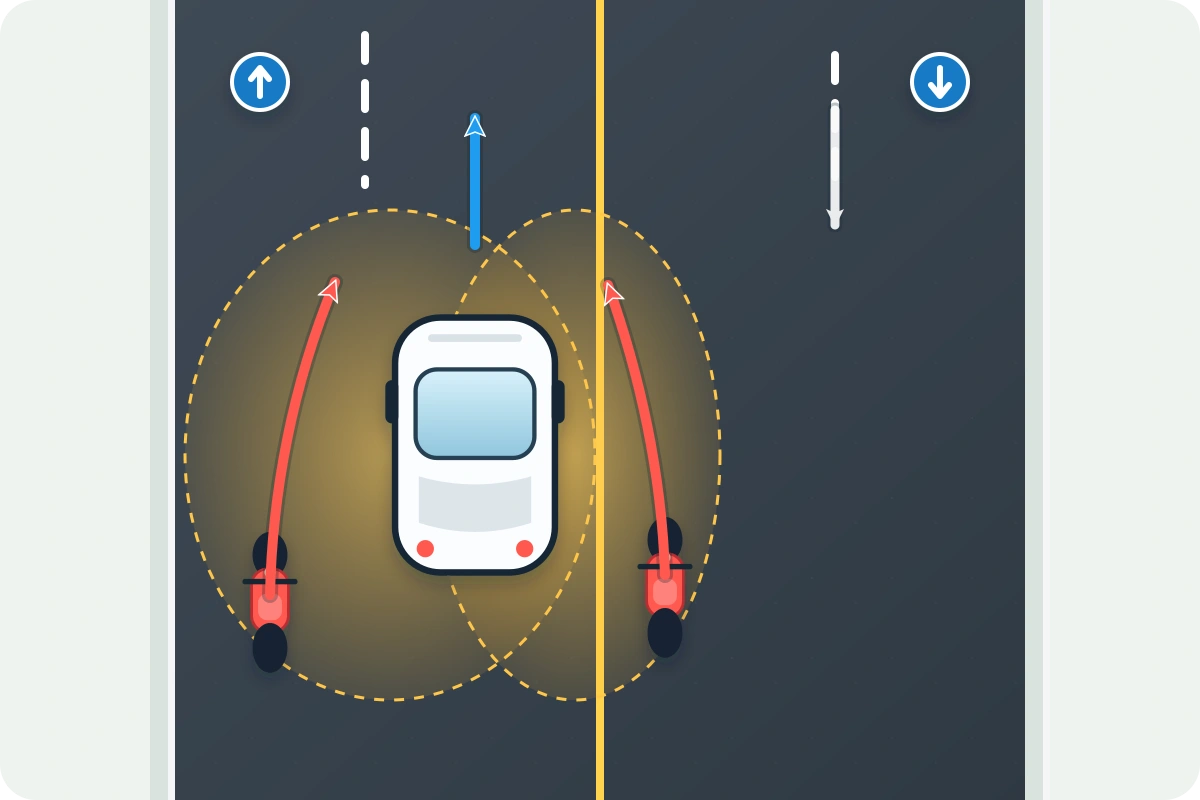
Scooters may appear in your blind spots
Scooters can ride on both sides of a car, including in areas your mirrors do not cover.
On busy roads a scooter may ride alongside a car, between lanes or along the road edge. That means it can be on either side of your vehicle — sometimes in a spot your mirrors do not show.
Before changing lanes, turning or opening a door, one glance in the mirror is not always enough. A habit that helps: mirror, then a quick look over your shoulder, with the indicator already on.
Signal early rather than at the last second, and move across smoothly instead of suddenly. Riders differ in speed and style like any other road users — the point is simply to check, not to assume that the space beside you is empty.
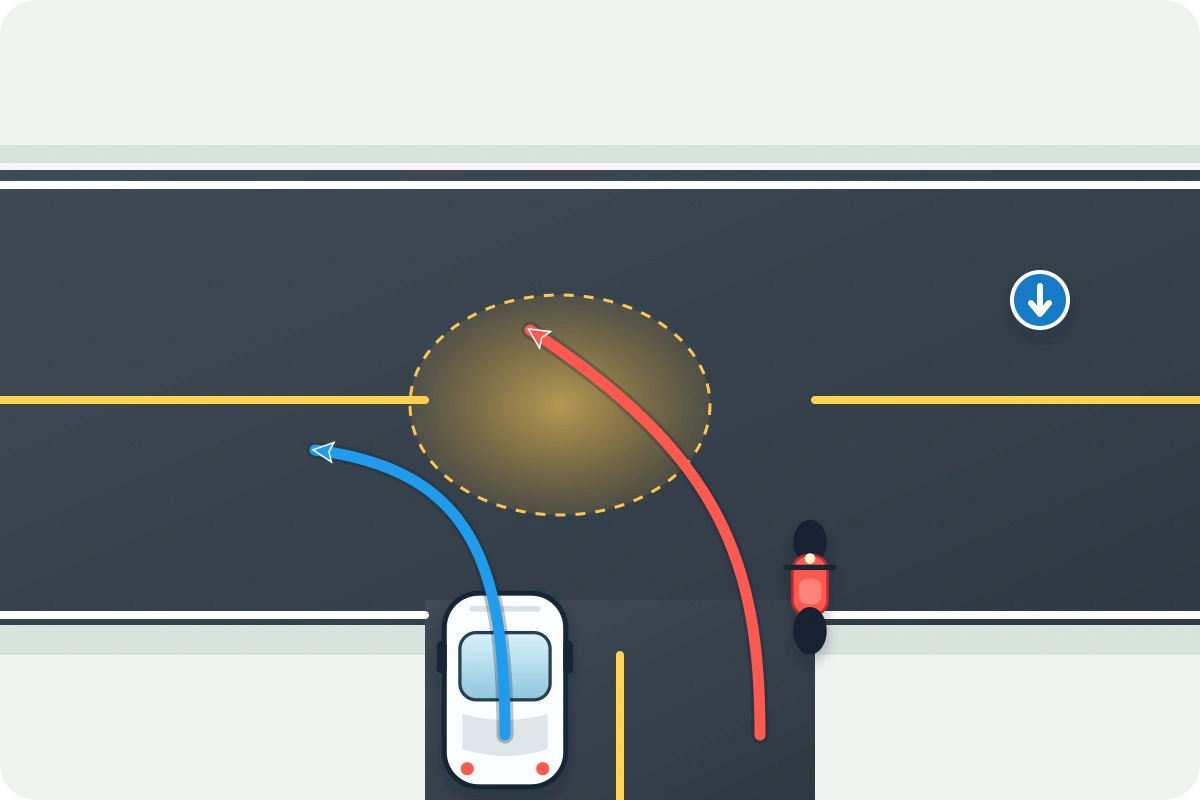
Drivers may cut across the corner
A short path through a turn can briefly bring a vehicle closer to the centre line.
At smaller junctions a car or scooter may enter a turn on a short path instead of following the curve of the road. For a moment that vehicle can end up closer to the oncoming lane than you expect.
Slow down before blind corners and T-junctions, keep a little room between you and the centre line, and avoid hugging it when the view ahead is limited. A few extra metres of space cost you nothing and buy a lot of reaction time.
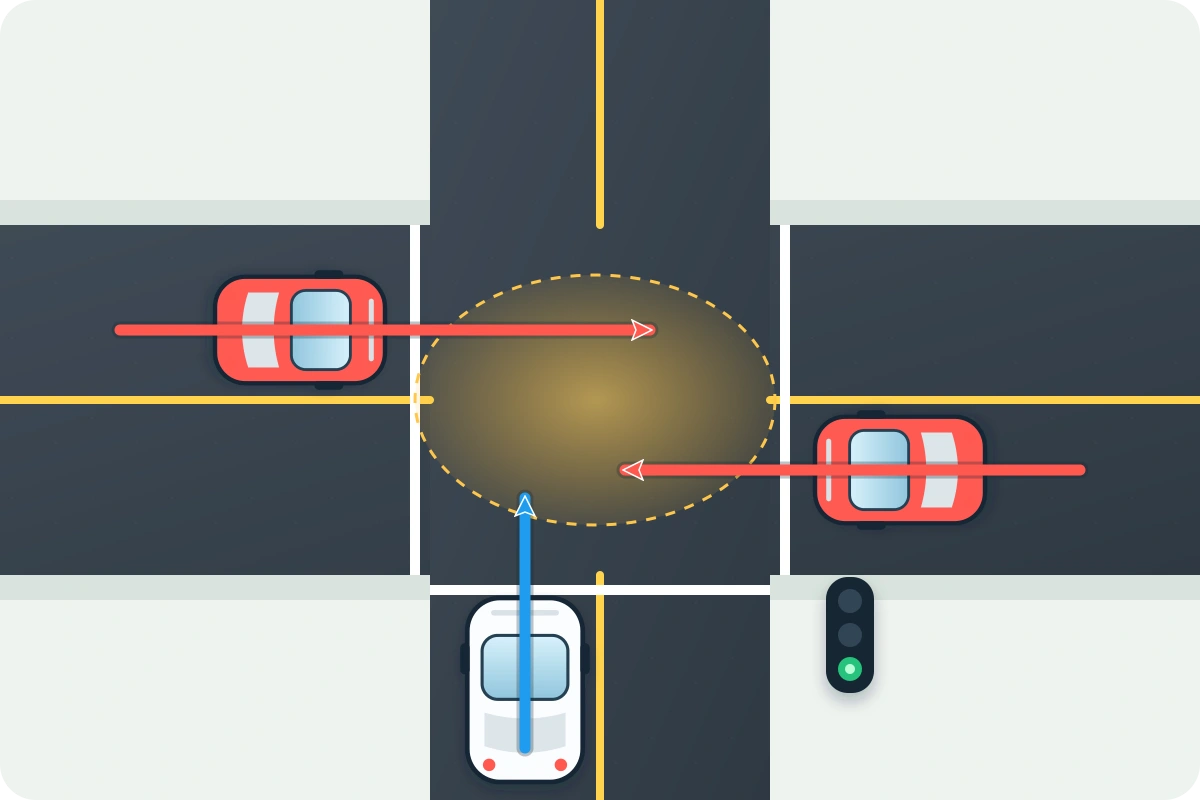
Green does not mean accelerate immediately
Take a second to check both sides before moving off on green.
When the signal changes, some vehicles may still be finishing their way through the junction. This is not permission to run a red light — traffic signals apply to everyone, and nothing here suggests otherwise. It is simply a reason not to launch the moment your light turns green.
Look both ways, let anything still crossing clear the junction and then move off smoothly. It costs one second and removes one of the most common surprises at Phuket’s busy intersections.
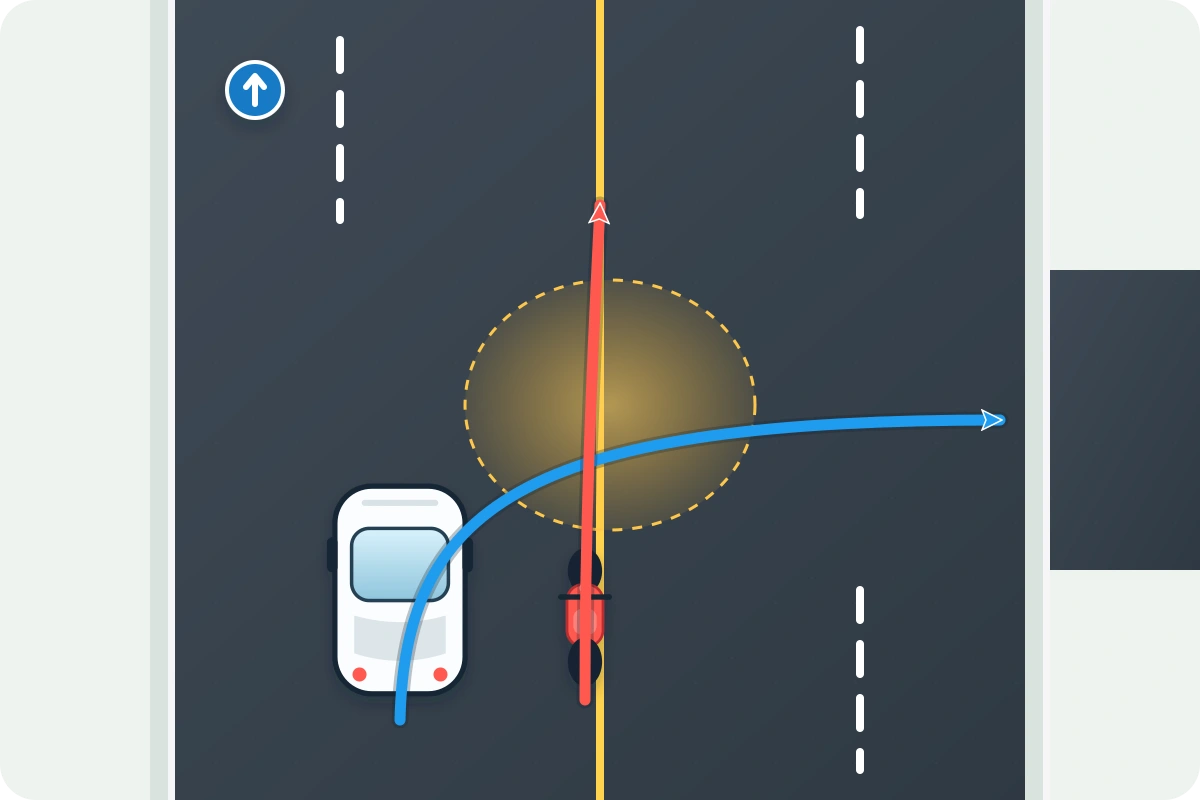
Check behind before turning right
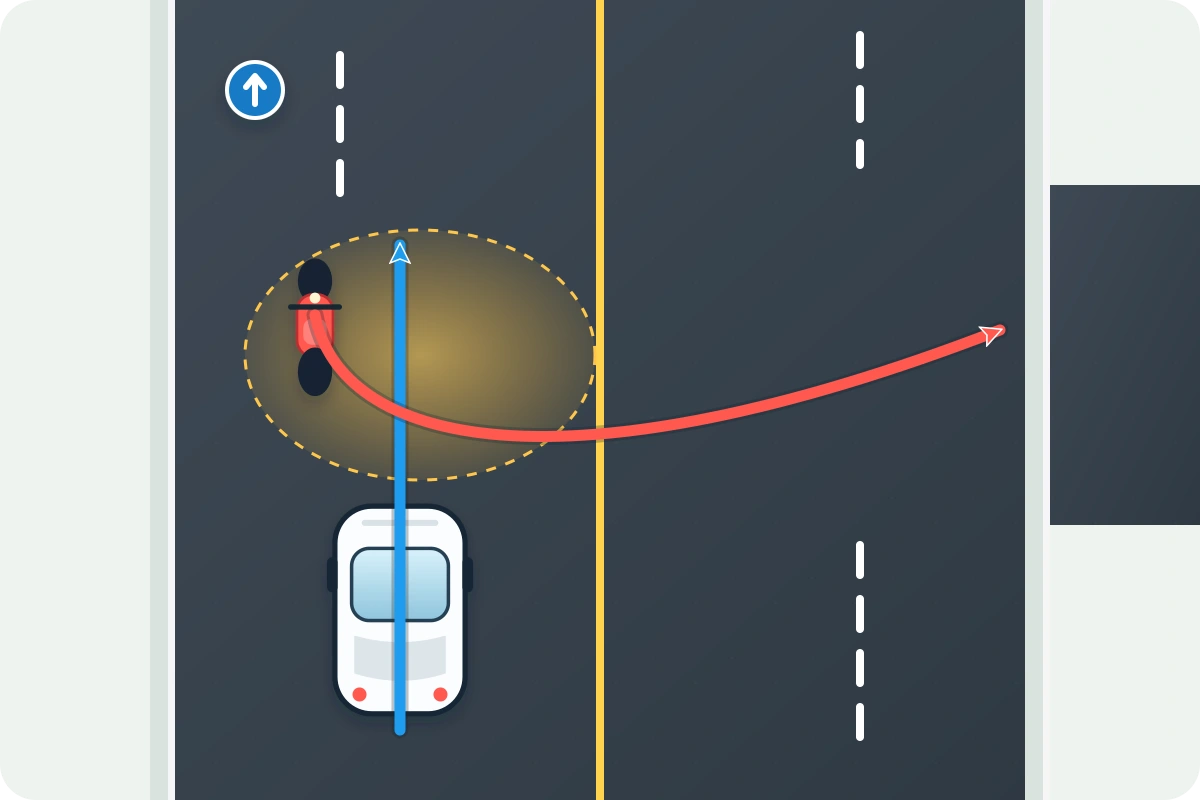
A scooter may start passing on the right just as you prepare to turn.
Because Thailand drives on the left, a right turn crosses the oncoming lane — and that is also where a scooter behind you may decide to overtake.
Switch the indicator on early, slow down gradually rather than braking sharply, and check the right-hand mirror and your blind spot immediately before you turn. Do not swing across the flow in one sudden movement; make the turn only when it is clearly free.
A slowing scooter may still turn unexpectedly
Slowing near the edge does not always mean parking — it can precede a turn.
A rider who slows down near the road edge is not necessarily about to park. They may be preparing to turn around, cross the road or pull into a driveway, sometimes without an indicator.
Do not rush to overtake. Increase your distance, watch the rider’s position and speed, and wait until the manoeuvre is clear. A patient few seconds is nearly always cheaper than a close call.
Lights, horn and hazard signals
Signals are less standardised in everyday practice than the rules suggest, so treat them as information rather than as instructions.
A short tap of the horn is often used to say “I am here” — for example when approaching a blind corner or passing close. It is usually not aggression.
Flashing headlights should not automatically be read as an invitation to go. It can mean “I am coming through”, “thank you” or something else entirely.
Hazard lights warn of danger or an unusual stop. Slow down and look for the reason.
Always confirm a signal against what the vehicle is actually doing: its speed, its position in the lane and its path.
Phuket’s traffic environments
Conditions change a lot between areas. These are general characteristics, not rules — use them to adjust your attention.
Patong
Dense traffic, many scooters, taxis and pedestrians, especially in the evening. Expect frequent stops and vehicles pulling out. See our Patong page for pickup details.
Kata and Karon
Hills, bends and traffic moving between the beaches. Keep speed moderate, especially on descents and in wet weather — our hill roads guide covers this in detail. Local pages: Kata Beach and Karon.
Chalong
Busy junctions and extra traffic around the pier. Allow more time at crossings and watch for vehicles changing lanes at short notice. Chalong pickup information is on its own page.
Rawai and Nai Harn
Smaller roads, driveways leading out of villas and parked vehicles narrowing the lane. Slow down where your view is blocked and expect people to step or pull out. See Rawai.
Phuket Town
One-way streets, frequent junctions and pedestrians. Read signs carefully and keep your speed low in the Old Town. See Phuket Town.
Airport and Thalang
Faster roads where vehicles may approach quickly from behind. Move into the lane you need early rather than at the last moment. Collecting a car on arrival? Read about airport pickup.
Rain, hills and tiredness
Heavy tropical rain can cut visibility and make roads slippery within minutes. If a downpour is severe, slow right down or stop somewhere safe rather than pushing on, and be especially careful on unfamiliar hill roads — see our hill roads guide. Never drive after alcohol or any impairing substance.
A defensive-driving checklist
No guide can make driving risk-free, but these habits help you stay ahead of most of the situations above.
Drive on the left and keep your road position consistent.
Leave more following distance than feels necessary.
Check mirrors and blind spots before every lane change and turn.
Signal early, not at the last second.
Slow down before unclear junctions, corners and driveways.
Do not accelerate the instant the light changes — check both sides first.
Expect scooters beside, behind and in front of the car.
Avoid unfamiliar hill roads during very heavy rain.
Never drive after alcohol or other impairing substances.
After an accident, stay safe and contact the rental provider.