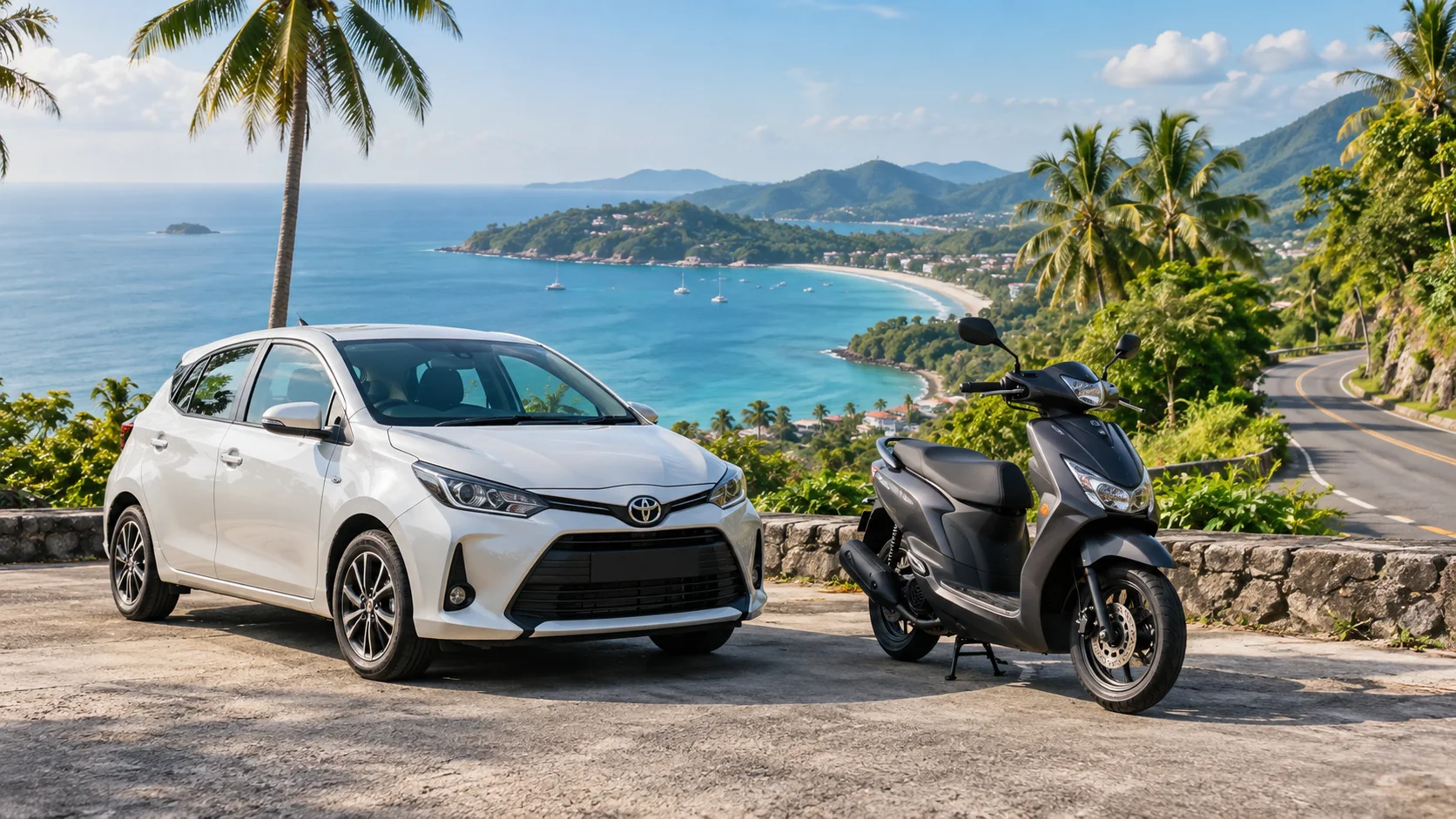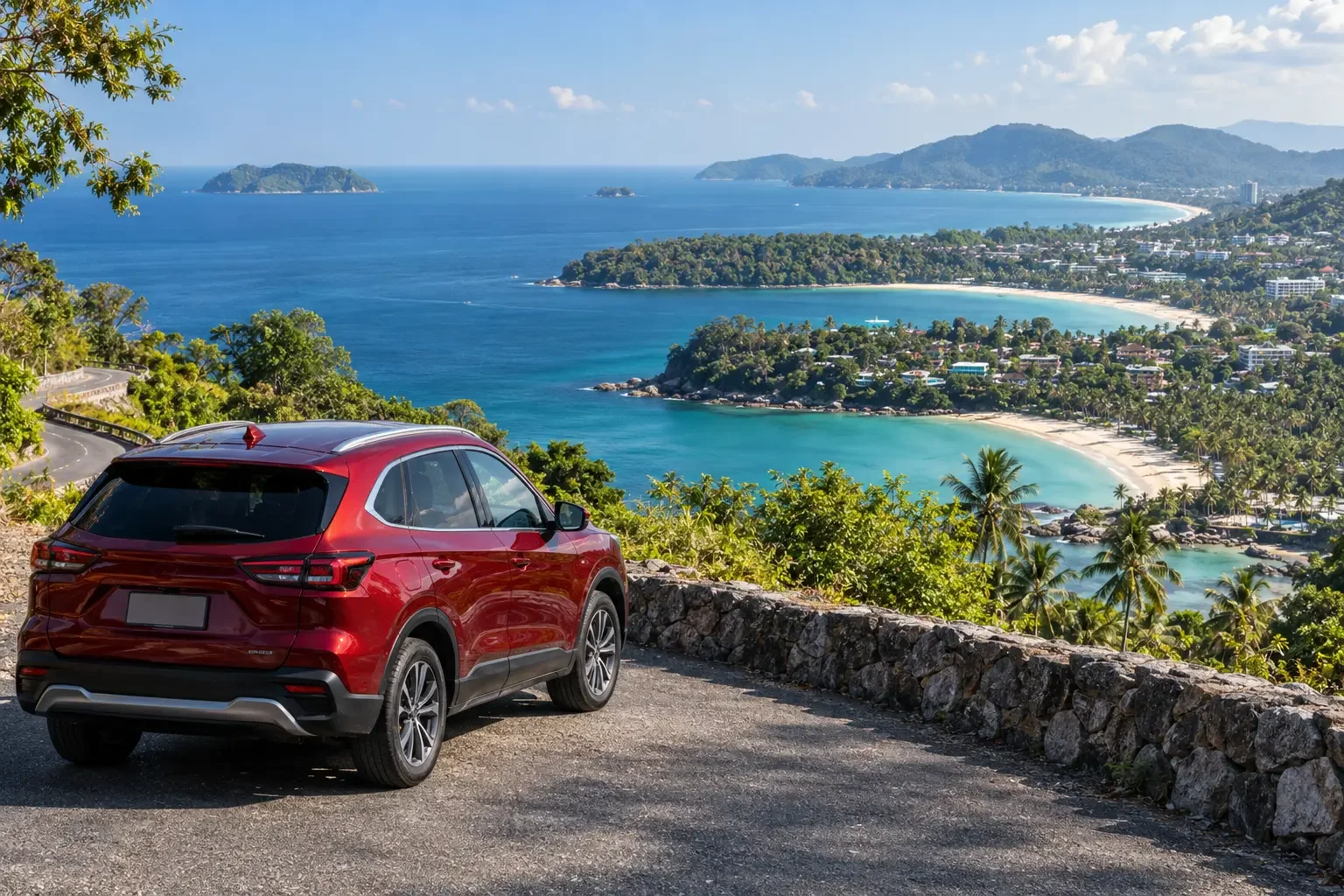
Rain in Phuket is not one constant condition. A bright road can turn into a loud tropical downpour, then clear again while another part of the island remains wet. Safe rainy-season driving is less about bravery and more about timing: noticing the change early, reducing demands on the car and being willing to wait.
Decide before the first drop
Look at the day as a sequence rather than a fixed timetable. If a viewpoint, steep villa road or airport departure is involved, leave extra time and keep one activity optional. Weather apps help with the broad picture, but the sky ahead and local drainage matter more than a precise minute-by-minute forecast.
Before moving, check that the tyres look properly inflated and have visible tread, the wiper blades clear the glass and the washer works. Clean the inside of the windscreen as well; film and humidity can create glare when headlights appear.
When the downpour begins
Reduce speed smoothly, switch on the appropriate lights and increase the gap to the vehicle ahead. Avoid sudden steering, braking and acceleration. Use air-conditioning or demisting to keep the glass clear. Hazard lights should not replace normal lighting while the car is moving; follow local rules and use them for a genuine warning or stopped hazard.
If rain becomes too loud to hear traffic or the wipers cannot maintain a useful view, find a safe place away from the carriageway and wait. Do not stop under trees, beside a blind bend or on a section where water is already collecting.
Standing water is an unknown, not a shortcut
A puddle can hide a pothole, kerb, open drain or water deep enough to affect the engine and electronics. If you cannot judge the depth and see a clear exit, turn around or wait. Copying a larger vehicle is unreliable because its clearance and intake height are different.
If the steering suddenly feels light after hitting water, release the accelerator gradually, keep the wheel steady and avoid stamping on the brakes. Give the tyres time to regain contact. After passing shallow water, test the brakes gently at low speed when it is safe.
Hills require more margin
Wet slopes reduce grip and lengthen stopping distance. Enter bends more slowly than feels necessary, complete braking before turning and leave space for scooters that may move away from the road edge. On a steep descent, select a suitable lower gear or use the vehicle's recommended mode so the brakes are not doing all the work.
Water, leaves and sand often gather near the outside of bends. A scenic road that felt easy in sunlight may deserve a different route during heavy rain.
Visibility problems continue after the rain
Low sun on wet asphalt can produce stronger glare than the storm itself. Spray from buses and trucks may briefly remove the view. Keep both hands ready, avoid sitting beside a large vehicle and do not overtake unless the road ahead is completely clear.
At night, slow down further. Road markings, pedestrians and dark scooters become harder to see, while reflections make distances deceptive. If the driver is tired after a beach day or flight, the safest decision may be to stop for food and let the worst traffic pass.
If the car shows a warning
Move to a safe location, switch off unnecessary electrical loads and contact the rental team. Do not continue through water after a warning light, loss of power or unusual engine sound. Never attempt a repair in a live lane. Photograph the dashboard and surroundings so the support team can understand the situation.
Build a small wet-weather kit
- A charged phone and offline route.
- Dry cloth for glass and mirrors.
- Water and a light layer for an unexpected wait.
- A waterproof bag for documents.
- The rental contact and insurance instructions saved offline.
Rain does not need to cancel every Phuket drive. It does require a schedule that can bend and a driver who is prepared to stop. Before choosing a car, check the tyres, wipers and luggage space during handover, then use the Phuket vehicle catalogue to find a comfortable fit for the route.