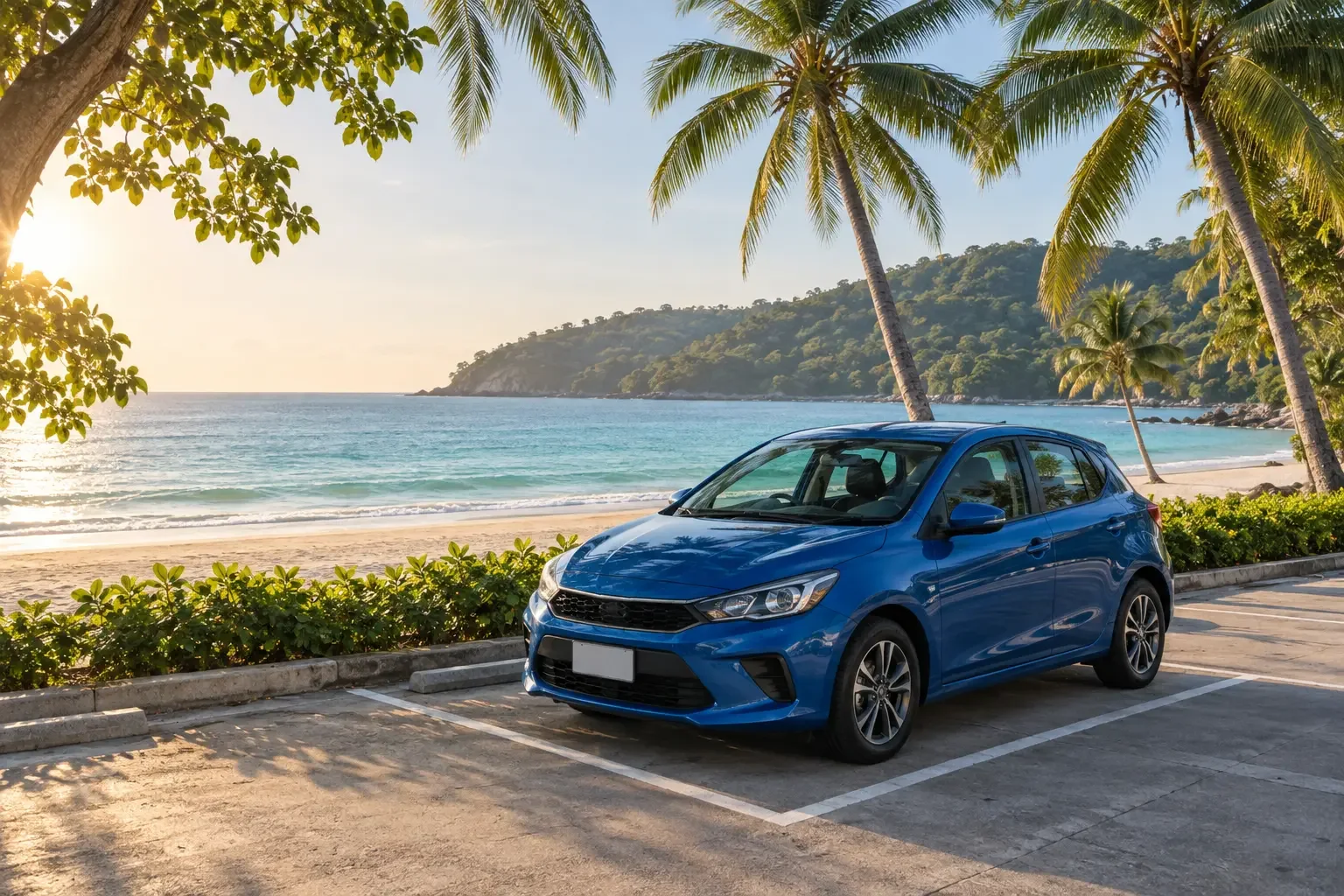
Parking in Phuket becomes easier when it is treated as part of the route rather than the final ten metres of it. The difficult moments usually begin when a driver reaches a popular beach or restaurant at the busiest time and starts circling while passengers give directions. A two-minute parking plan made before departure prevents most of that pressure.
Read the place before choosing a space
Slow down early and look for official signs, painted kerbs, bay markings, barriers and attendants. Conditions can change by time of day, event or road work, so a row of parked vehicles is not proof that stopping is allowed. If a sign is unclear, use a staffed car park or ask the hotel or venue where guests should leave a car.
Never block a gate, loading point, fire access, pedestrian crossing, narrow bend or the path used by scooters. Leave enough width for larger vehicles to pass. A position that technically fits the car can still create a dangerous bottleneck.
Beach parking: arrive before the squeeze
Popular beach approaches fill quickly in good weather. Arriving earlier gives a better chance of a marked or managed space and a calmer walk to the sand. If the closest area is full, move to the next legitimate option instead of inventing a space on a corner or soft shoulder.
Do not leave valuables visible. Take passports, phones and wallets with you, close every window and avoid putting expensive equipment into the boot after parking where others can watch. Sand on feet and wet clothing also make pedals slippery, so clean up before driving.
Old Town and busy streets: think in blocks
In dense urban areas, searching directly outside one café wastes time and attention. Choose a legal car park or a quieter street a few blocks away, then walk. Check the closing time if the area is gated. Photograph the location or save a pin; similar streets are surprisingly hard to recognise after dark.
When parallel parking, signal early and wait for enough room rather than forcing traffic to guess. Fold mirrors only after the car is correctly positioned, and check for scooters before opening a door.
Hotels and villas: verify the final approach
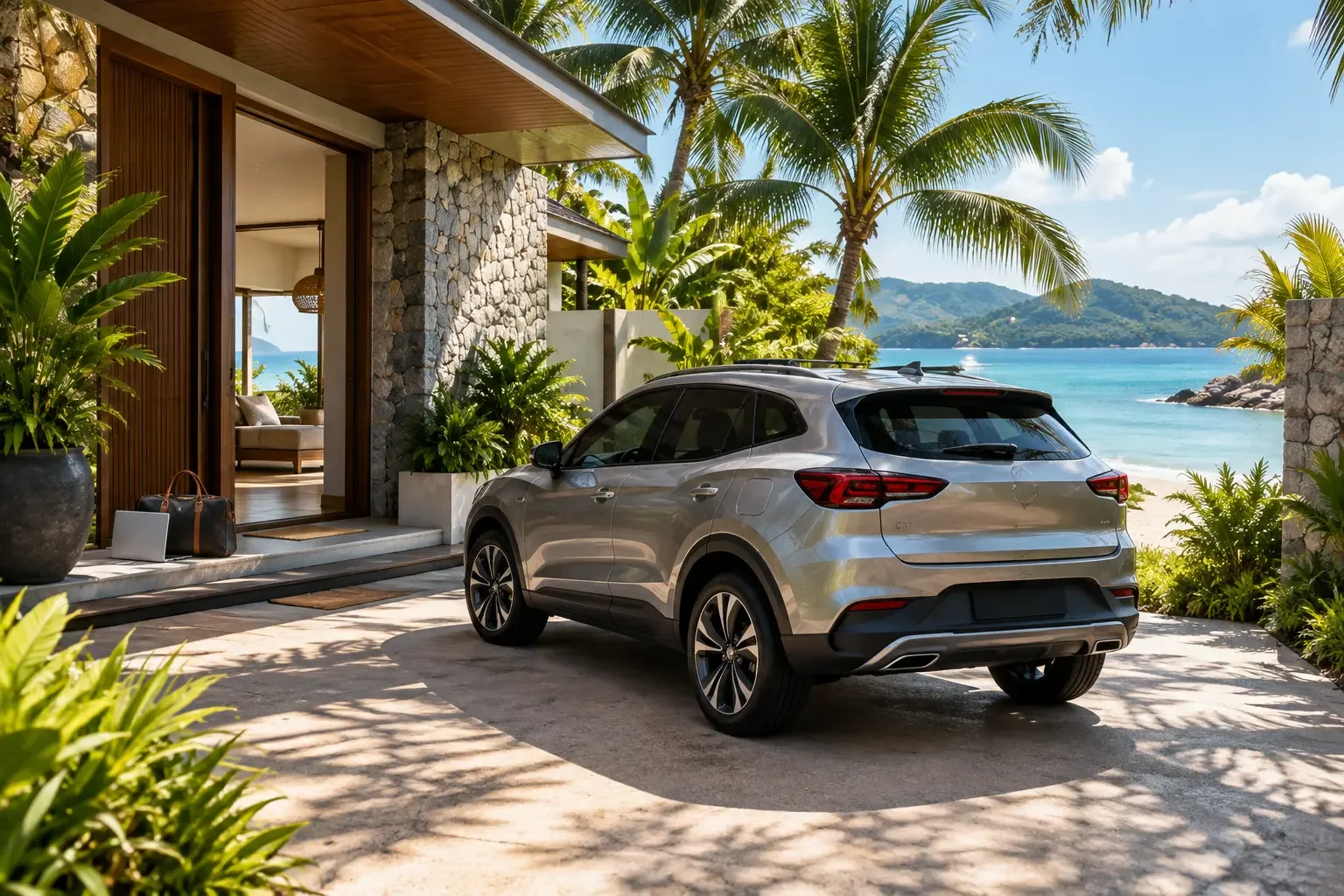
“Parking available” can mean anything from a wide covered area to one steep space shared by several villas. Before arrival, ask whether access is narrow, whether a gate code is required and whether a large vehicle can turn around. On a slope, use the parking brake correctly and follow the vehicle manual for selecting gear or park mode.
Never leave a rental where keys must be handed to an unknown person. If valet parking is offered, confirm the process with the venue and remove important belongings.
Viewpoints and roadside stops: visibility decides
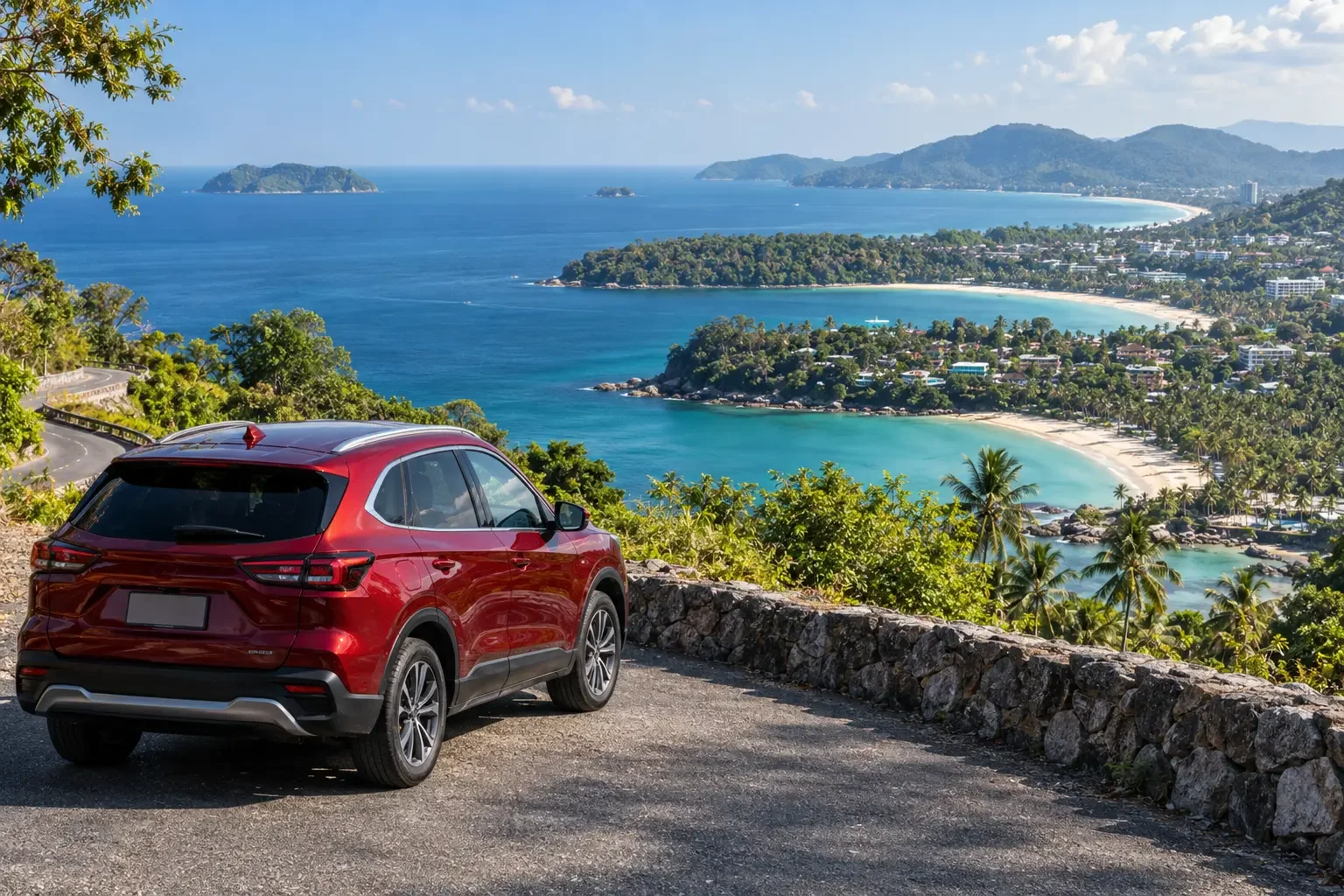
A beautiful view is not a safe stopping place. Use only areas where the vehicle is fully outside the traffic lane and visible to approaching drivers. Avoid the crest of a hill, sharp bends and soft edges after rain. If the official area is full, continue to the next safe place; reversing into moving traffic for a photograph is not worth it.
Shopping centres are useful reset points
Managed multi-storey car parks can be easier than street parking, but note the entrance height and ticket system. Photograph the level, colour zone and nearest lift. Before leaving, find out whether payment happens at a machine, a staffed booth or the exit. Prepare the ticket before reaching the barrier.
If the car is clamped, moved or damaged
Do not argue with attendants or try to remove a device. Photograph the location and notice, contact the rental team and follow the official instructions. After damage, record the vehicle and surroundings before moving it if it is safe and legal to do so. A rental contact can explain which report or document the agreement requires.
A calm parking routine
- Check parking options before starting navigation.
- Arrive outside the busiest period when possible.
- Read signs and preserve every entrance and pedestrian route.
- Lock the car, hide nothing visibly and save the location.
- Walk away if the only option feels doubtful.
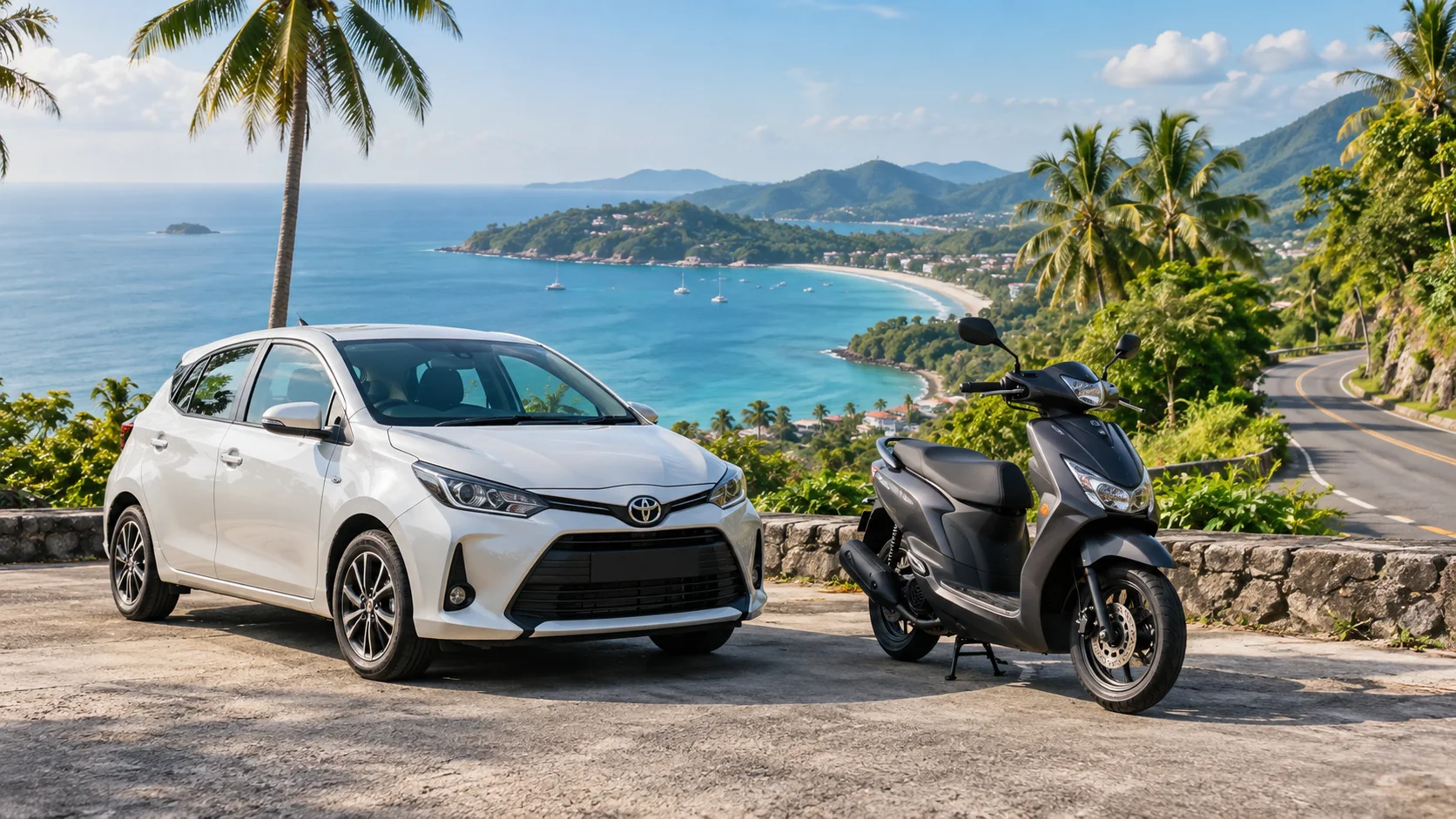
A smaller car can make this routine much easier in Phuket. If parking is a major part of your itinerary, compare compact choices in the current vehicle list. The best parking space is a legal, predictable one, even when it is five minutes farther from the beach.